
How Photo-Tourism Can Potentially Undermine Conservation
By Trevor Oertel
In the global conversation on wildlife conservation, photo-tourism is often exalted as a noble, low-impact alternative to hunting. Yet beneath the glossy brochures and curated Instagram moments lies a model that frequently undermines the long-term conservation of ecosystems.
Rather than promoting biodiversity, photo-tourism often caters to the emotional desires of tourists, especially the need to see charismatic mega-fauna like elephants and lions, at the expense of ecological sustainability and the survival of less “marketable” species.
Unlike traditional science-based conservation, which seeks ecological balance, photo-tourism has increasingly become a spectator spectacle-driven business. In parks such as Kruger National Park, Hwange National Park, and Madikwe Game Reserve, management strategies are influenced more by tourist demand for sightings of the “Big Two or Three” than by ecological realities. As a result, natural processes are skewed, and less charismatic species, often vital to the health of ecosystems, are neglected or displaced.
This approach does not conserve nature, it reshapes it into a safari checklist.
One of the most urgent examples of this is the unchecked growth of elephant populations in several Southern African reserves and countries, including Botswana, South Africa, and Zimbabwe. This is not a phenomenon confined to one park or one nation, it is a regional conservation crisis.
In places like Madikwe Game Reserve, where the ecological carrying capacity for elephants is roughly 200 animals, the population has exploded to over 1,600 elephants. This growth is not due to mismanagement, but deliberate inaction driven by photo-tourism needs and external pressure. Tourists want to see elephants in abundance, and so management strategies allow elephant numbers to exceed sustainable levels, at great cost to flora, other fauna, and the integrity of the ecosystem.
Even with all the recent media attention of a looming ecological disaster in the fenced in 75 000 hectare Madikwe Game Reserve, the owner of one of the 33 private game lodges within the reserve is quoted in the “Daily Southern and East African Tourism Update” magazine of objecting to the Reserve management authority for proposing the reintroduction of trophy hunting and culling.
The lodge owner said “Madikwe’s 33 safari lodges generate approximately R1 billion (€47.8 million) in annual revenue and create hundreds of jobs for communities.
By contrast, trophy hunting would bring in approximately R5 million (€239 000) to R7 million (€335 000) per year while simultaneously dealing a devasting blow to the photographic tourism sector.”
I can’t help wonder how much revenue a bare barren wasteland will generate. But then I guess chasing after 200 elephants in 750 km² isn’t every tourists idea of a great safari.
The same problem Is playing out across Kruger, Hwange, and much of Botswana. Woodland habitats are being systematically destroyed. Once diverse landscapes are being turned into elephant-scarred wastelands, threatening the very survival of countless plant and animal species. These include ground and hole nesting birds, vultures, eagles, small antelope, reptiles, and even keystone tree species critical for the entire web of life.
Ironically, hunting tourism, which operates at a far smaller scale and has a significantly lower carbon and ecological footprint, is often vilified by global audiences and activists. A single hunting client can fund vast conservation areas, anti-poaching patrols, and community development without the need for lodges, mass transport, and continuous game drives.

In contrast, photo-tourism requires a high volume of visitors, diesel-powered vehicles, paved roads, water-intensive lodges, and constant activity in wildlife areas. This places strain on fragile ecosystems and contributes significantly to pollution, habitat fragmentation, and animal disturbance.
Yet despite its sustainability and tangible benefits, hunting is demonized while photo-tourism is placed on a pedestal, largely due to optics, not evidence.
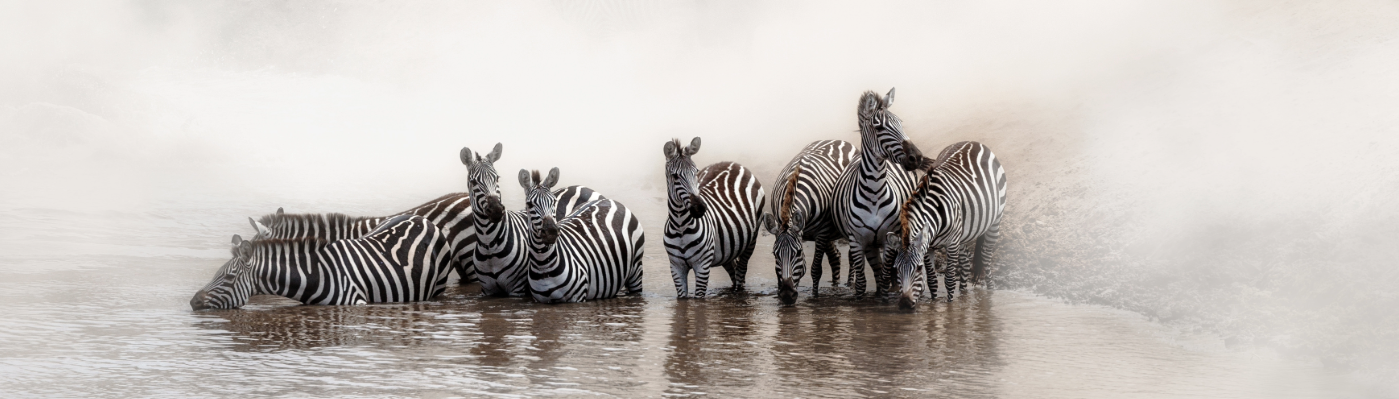
Another hidden cost of photo-tourism is the relentless harassment of wildlife as we have seen playout on social media over the past few years. Tourists demand close-up encounters and safari operators, eager for tips and 5-star reviews, deliver. Whether it’s zebra and wildebeest crossing rivers on migration in East Africa, or predators on a hunt in Hwange, Chobe or Madikwe, these natural moments are increasingly being disrupted by convoys of vehicles, often crowding animals to the point of distress or altering their behavior.
The latest display of lunacy as recently seen in the Maasai Mara, is wildebeest ambushed on foot, by masses chasing the next photograph moment, as they were attempting to cross an East African river. The amateur paparazzi seem to have forgotten that these animals don’t see man as kinship but rather as predators.
Animals are forced to adapt or flee. Breeding, feeding, hunting, and territorial behavior are all compromised, yet these impacts are often ignored because the disturbance looks like admiration.
The broader Issue is that no single tourism model, whether photo-based or hunting-based, should dominate conservation thinking. The Southern African model has worked precisely because it integrates both hunting and photographic tourism, allowing landscapes to support diverse forms of income and maintain ecological balance.
Where one model is prioritized at the expense of the other, often due to political pressure or foreign ideology, the result is imbalance. Local communities lose income. Conservation budgets shrink. And worst of all, nature is reshaped to serve optics, not survival.
If conservation is truly the goal, then emotional preferences must not be allowed to override science, ecology, and experience on the ground. We must stop viewing conservation through a Westernized, sentimental lens and instead embrace a balanced, multi-faceted approach that serves biodiversity, communities, and long-term sustainability.
The realities in game reserves and national parks such as Madikwe, Kruger, Hwange, and Chobe are warnings. They show that pandering to the tourist gaze, allowing elephants to proliferate beyond ecological limits or disrupting predators for a better photo, is not harmless. It is a conservation failure in the making.
Let us not allow emotional aesthetics to blind us to ecological truths. Both hunting and photo-tourism have a role. But only when they are guided by ecological carrying capacity, adaptive management, and respect for nature, not consumer demand, can we truly claim to be conserving Africa’s wild heritage.
Trevor Oertel
Bio
Trevor Oertel is a South African businessman with business interests in South Africa, Botswana and the UAE. But foremost, he is a conservationist and wildlife enthusiast. In his youth, he was a professional hunter and wildlife manager, hunting and working in the Eastern Cape and the Kalahari. Trevor’s passion is falconry, a pursuit he has followed since childhood, specifically hunting ducks and partridges under Peregrine Falcons. Trevor has been very instrumental in legalising falconry in various provinces in South Africa and was instrumental in the formation of the South African Falconry Association (SAFA) in 1990. Trevor has served under various Ministers of Environmental Affairs, on the “Minister’s Wildlife Forum”. As a former farmer in both South Africa and Zimbabwe, he finds some conservationists’ naivety in understanding basic concepts such as “carrying capacity” and “sustainable use” hard to understand as they sit back watching biodiversity and habitat destroyed, while promoting failed bans that enrich poachers and animal right organisations at the expense of our wildlife, natural heritage and African people. Trevor is currently an Executive Committee Member of the “Sustainable Use Coalition of Southern Africa” (SUCo-SA) and has represented SUCo-SA at CITES meetings both in Panama and Geneva.