
Giraffe Coats: Patterns, Purpose and Conservation Part 2

| If the spots look like… | You are looking at… |
| Soft rounded islands on tan | Southern Giraffe |
| Hand-torn oak leaves | Masai Giraffe |
| Craft-scissors polygons on a white net | Reticulated Giraffe |
| Big rectangles with beige gaps | Northern Giraffe |
The overall style of the blotches splits cleanly by species. The IUCN now treats giraffes as four species.
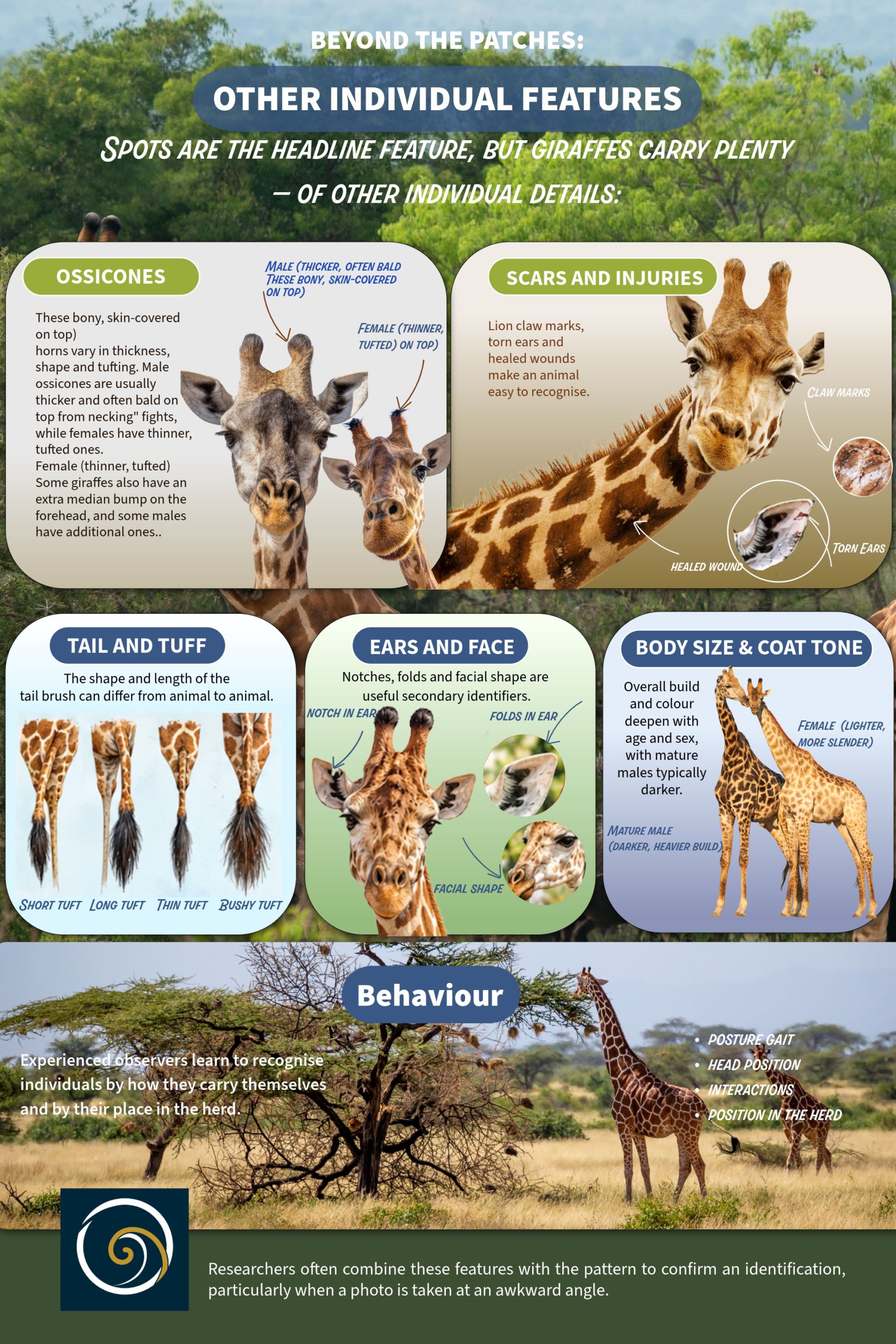
Beyond the patches: how else do we tell giraffes apart?
Every giraffe’s coat pattern is unique, and it’s the headline feature for identification. But giraffes carry plenty of other individual details too. Here’s what researchers and experienced observers look for
Ossicones
These bony, skin-covered “horns” vary in thickness, shape and tufting. Male ossicones are usually thicker and often bald on top from “necking” fights. Females have thinner ones with tufts on top. Some giraffes also have an extra median bump on the forehead, and some males have additional ones.
Scars and injuries
Lion claw marks, torn ears and healed wounds make an animal easy to recognise. Each one marks something that giraffe survived.
Tail and tuft
The shape and length of the tail brush differ from animal to animal. It can be short, long, thin or bushy, so it’s worth a look when the giraffe is walking away from you!
Ears and face
Notches and folds in the ears, and the shape of the face, are useful secondary identifiers.
Body size and coat tone
Overall build and colour deepen with age and sex. Mature males are typically darker and heavier, and females are lighter and more slender.
Behaviour
Experienced observers learn to recognise individuals by how they carry themselves. They look at posture and gait, head position, interactions with others, and each animal’s place in the herd.
Why it matters: Researchers often combine these features with the coat pattern to confirm an identification, especially when a photo is taken at an awkward angle.
Next time you spot a giraffe, look past the patches. Can you spot any of these features?